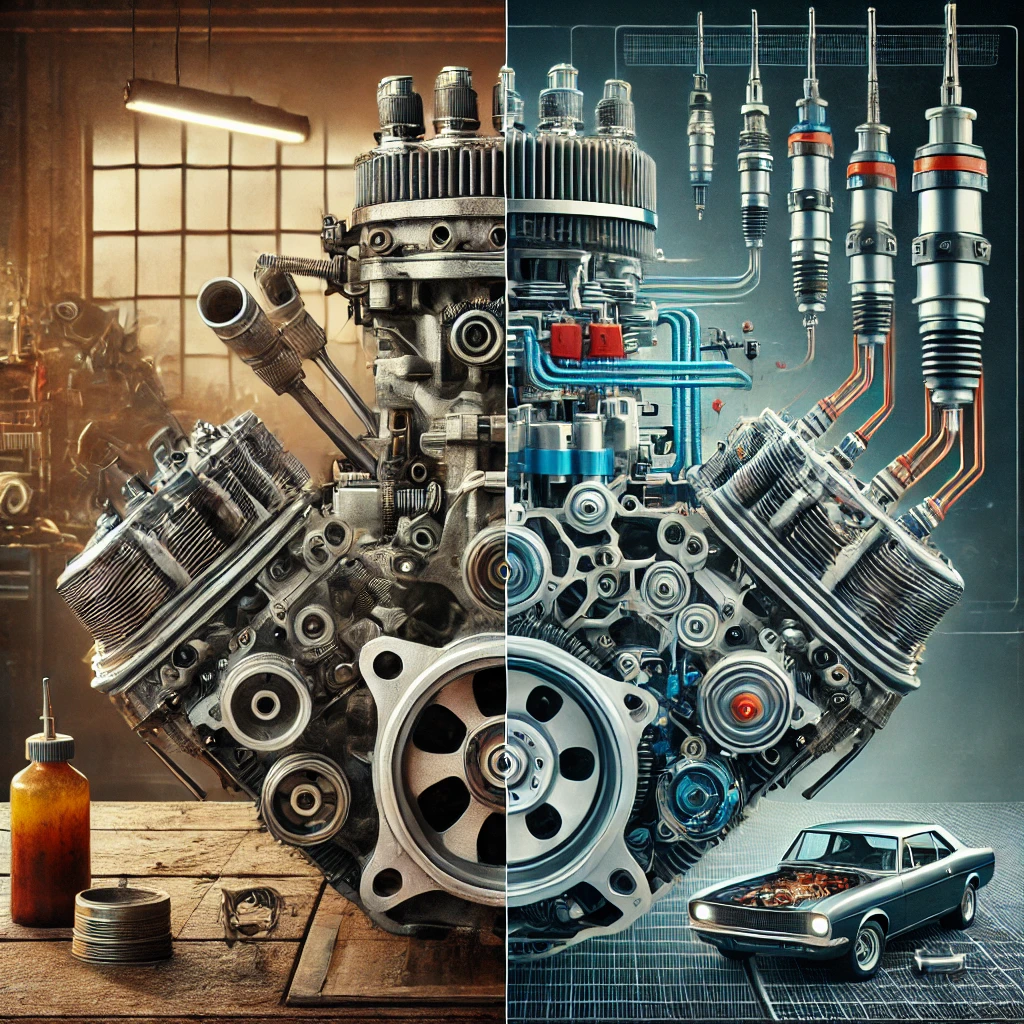
Both the carburetor and the electric intake system are designed to supply an air-fuel mixture to an engine, but they operate very differently. The carburetor is a traditional, mechanical device, while the electric intake (part of modern fuel injection systems) relies on electronic sensors and computer control. Understanding these systems is crucial for appreciating the evolution of automotive technology and their respective advantages.
Overview of Carburetor and Electric Intake
| Feature | Carburetor | Electric Intake (Fuel Injection) |
|---|---|---|
| Function | Mechanically mixes air and fuel | Precisely controls fuel injection using sensors |
| Technology | Mechanical | Electronic, computer-controlled |
| Efficiency | Less efficient | Highly efficient |
| Emissions | Higher emissions | Lower emissions |
| Tuning | Manual adjustment required | Automatic, real-time tuning via ECU |
| Applications | Classic, vintage cars, motorcycles | Modern cars, high-tech vehicles |
How They Work
Carburetor
- Mechanical Operation: Uses airflow and pressure differences (Venturi effect) to draw fuel into the airstream.
- Fuel Mixture Control: Adjusts air-fuel mixture manually via jets and mechanical linkages.
- Components: Includes a throttle valve, fuel bowl, jets, and choke for cold starts.
- Power Delivery: Requires constant manual tuning for optimal performance at different RPMs and driving conditions.
Electric Intake (Fuel Injection)
- Electronic Control Unit (ECU): Controls fuel injection based on data from sensors such as oxygen, airflow, and throttle position.
- Fuel Delivery: Fuel is sprayed directly into the intake manifold or combustion chamber by injectors.
- Sensors: Includes mass airflow sensor (MAF), throttle position sensor, and engine temperature sensor for real-time adjustments.
- Precision: Provides an exact air-fuel ratio for maximum efficiency and power across all conditions.
Advantages and Disadvantages
Carburetor
Advantages:
- Simple and easy to maintain.
- Affordable to produce and repair.
- Provides a nostalgic feel and is ideal for classic or vintage cars.
Disadvantages:
- Less precise fuel delivery, leading to inefficiency.
- Poor fuel economy and higher emissions.
- Requires frequent manual tuning and maintenance.
Electric Intake (Fuel Injection)
Advantages:
- Precise control over the air-fuel ratio for optimal performance.
- Better fuel efficiency and lower emissions.
- Adjusts automatically to altitude, temperature, and engine load.
- Compatible with modern engines and stricter environmental regulations.
Disadvantages:
- More complex and expensive to repair or replace.
- Requires specialized diagnostic tools.
- Not suitable for classic vehicles or those without an ECU.
Performance Comparison
Power Output:
- A carburetor may deliver strong performance but lacks the precision of modern fuel injection.
- Fuel injection ensures consistent and reliable power delivery.
Efficiency:
- Electric intake systems are significantly more fuel-efficient due to their precise control of the air-fuel ratio.
Versatility:
- Electric intakes adapt to changing driving conditions seamlessly.
- Carburetors struggle with extreme variations like altitude changes.
Applications
- Carburetor: Found in vintage cars, motorcycles, racing vehicles requiring simpler setups, and engines in remote areas where electronic systems might be impractical.
- Electric Intake: Universal in modern vehicles, hybrids, and performance cars requiring advanced tuning.
Conclusion
The carburetor represents the simplicity and charm of traditional engine design, while the electric intake system symbolizes the precision and sophistication of modern automotive engineering. If you’re working with a classic vehicle, a carburetor might be the right fit, offering mechanical simplicity and a nostalgic experience. For modern cars, fuel injection provides unmatched efficiency, performance, and environmental compliance.