The carburetor is one of the most iconic components in the history of internal combustion engines. Although modern vehicles use fuel injection systems, carburetors were once the primary method for delivering air and fuel to an engine. Understanding how carburetors work, their history, and the differences between stock and high-performance versions is important for anyone interested in classic cars, automotive history, or car modifications.
In this article, we’ll explore how a carburetor functions, its evolution over time, and the differences between stock carburetors and high-performance carburetors.
What is a Carburetor?
A carburetor is a mechanical device used in internal combustion engines to mix air with fuel in the correct ratio for combustion. It essentially performs the job of delivering the right amount of fuel into the engine while ensuring the proper amount of air enters as well.
The carburetor’s primary role is to regulate this air-fuel mixture based on the engine’s demands, adjusting for things like throttle input and engine speed.
How a Carburetor Works:
At its core, a carburetor relies on basic principles of physics, such as airflow, vacuum, and pressure differentials to mix fuel and air efficiently. Here’s how it works:
- Air Intake: Air enters the carburetor through an intake air filter and flows into the carburetor’s main body.
- Fuel Delivery: Fuel is drawn from the gas tank through a fuel line into the carburetor. The fuel flows into a fuel bowl (a small chamber within the carburetor).
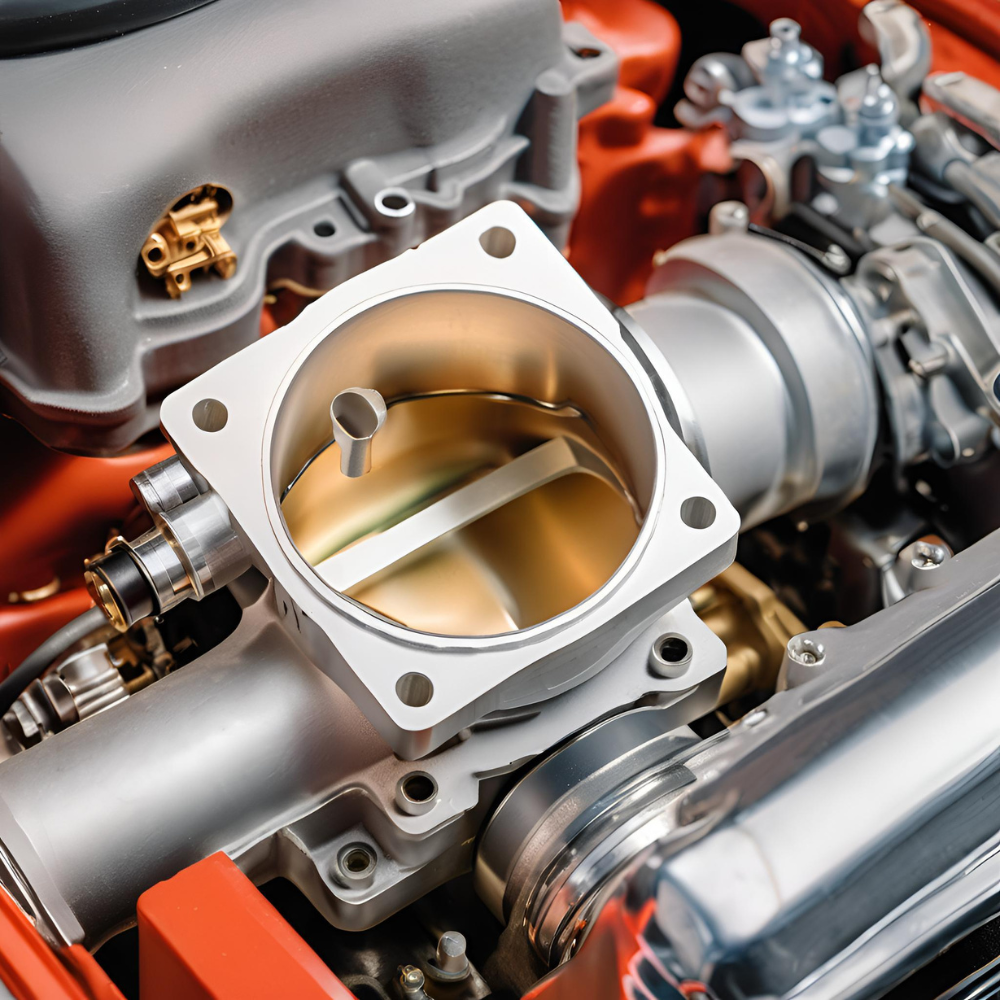
- Throttle Valve: The throttle valve (often controlled by the accelerator pedal) regulates how much air and fuel enter the carburetor. Opening the throttle increases airflow, which signals the carburetor to allow more fuel into the air stream.
- Venturi Effect: As air flows through the carburetor, it passes through a narrowing section called the Venturi. This constriction causes the air to speed up and the pressure to drop, creating a vacuum effect that draws fuel from the fuel bowl into the air stream.
- Fuel-Air Mixture: The fuel mixes with the air in the carburetor, creating a combustible mixture. This mixture is then directed into the engine’s intake manifold, where it enters the cylinders for combustion.
- Idle Circuit and Choke: At low speeds or idle, a separate set of passages (idle circuit) and the choke are used to ensure the engine runs smoothly by providing a richer mixture of fuel and air.
- Jets: Carburetors use small jets (or orifices) that control the flow of fuel at different stages of engine operation. For example, the main jet delivers fuel at higher throttle openings, while the idle jet supplies fuel at idle speeds.
The History of the Carburetor
The carburetor has been a key component in automotive engines for over a century, with its development evolving as car technology advanced. Here’s a brief look at its history:
- Early Development (1800s – Early 1900s):
- The concept of the carburetor dates back to the late 1800s. The earliest carburetors were simple devices that relied on gravity to deliver fuel to the engine.
- Karl Benz, the inventor of the first petrol-powered automobile, used a primitive carburetor to mix air and fuel.
- Advancements in the Early 20th Century:
- In 1902, C.V. William developed a more practical carburetor design, introducing the idea of the Venturi tube, which helped improve the fuel-air mixing process.
- By the 1920s, carburetors had become a standard feature in internal combustion engines, with major manufacturers like Holley and Stromberg leading the way in refining their designs.
- Mass Production Era (1930s – 1960s):
- The carburetor became ubiquitous in cars during this time. The Holly 94, Stromberg 97, and Carter W-1 became popular models, with performance tuning starting to gain traction.
- Carburetors were used in nearly all cars until the 1980s, when fuel injection systems began to emerge as the more efficient and reliable technology.
- Decline and Replacement by Fuel Injection (1970s – 1990s):
- In the 1970s and 1980s, fuel injection systems began to replace carburetors due to stricter emissions regulations and the desire for better fuel efficiency and performance.
- By the 1990s, fuel injection had become the standard, and carburetors largely fell out of use in everyday consumer vehicles. However, they remain popular in certain performance vehicles, motorcycles, and classic cars.
- Modern Carburetors:
- Carburetors are still used in some racing cars, classic cars, and motorcycles. Today’s carburetors are much more sophisticated, offering adjustable jets and improved airflow management for better performance.
Stock Carburetor vs. High-Performance Carburetor
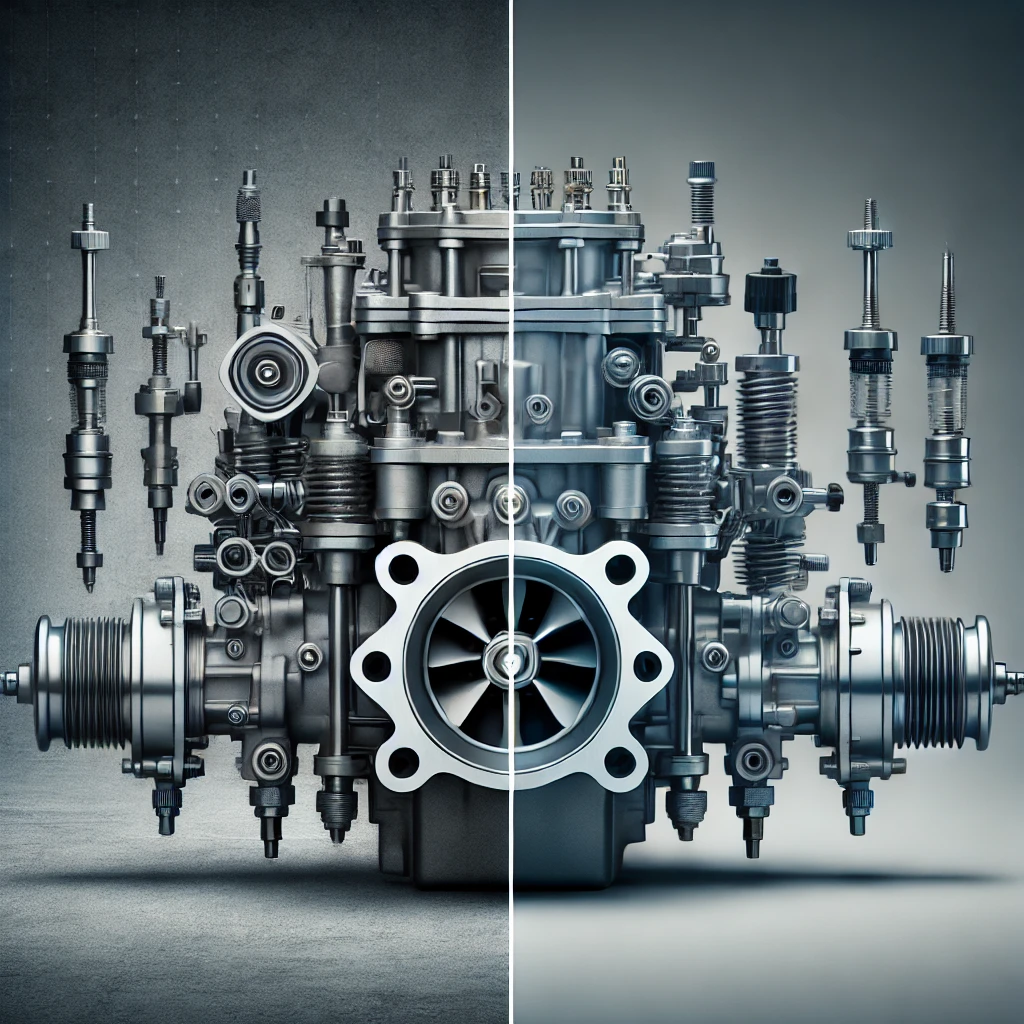
While stock carburetors are designed for efficiency and reliability in everyday driving, high-performance carburetors are built to maximize power output and handle the extreme demands of racing engines or heavily modified vehicles. Let’s look at the key differences between stock and high-performance carburetors:
Stock Carburetors:
- Design: Stock carburetors are designed for typical driving conditions, providing a balance of fuel economy and engine performance.
- Fuel-Air Mixture: Stock carburetors generally have preset jets and tuning to provide a reliable mixture for average driving conditions.
- Simplicity: They are usually simpler in design with fewer adjustments needed, making them easier to maintain for regular drivers.
- Reliability: Stock carburetors are built for longevity and consistency, providing smooth operation under normal driving conditions.
- Size: The carburetor size (measured by the diameter of the venturi or the throttle bores) is usually smaller in stock carburetors to optimize fuel efficiency and emissions.
Common Stock Carburetor Models:
- Motorcraft 2100: A common carburetor used in many domestic cars in the 1960s and 1970s.
- Rochester Quadrajet: A well-known stock carburetor used in GM vehicles, known for its versatility and ability to handle both high and low speeds.
High-Performance Carburetors:
- Design: High-performance carburetors are designed to deliver more fuel to the engine, enabling higher power output. They often feature adjustable components for tuning the air-fuel mixture.
- Fuel-Air Mixture: These carburetors can handle higher fuel flow rates and may include features like multiple barrels (e.g., 4-barrel carbs) and progressive linkage for more precise fuel delivery.
- Customization: Performance carburetors are highly tunable, allowing enthusiasts and race teams to adjust jet sizes, throttle response, and airflow to optimize the engine for racing or high-performance applications.
- High-Flow: High-performance carbs use larger bores, which can flow more air and fuel to support higher engine RPMs and power outputs.
- Efficiency: While high-performance carbs provide more power, they may sacrifice some fuel economy and smoothness of operation under lower loads, as they are tuned for performance rather than economy.
- Material: High-performance carburetors are often made from lightweight materials like aluminum to reduce weight and improve heat dissipation.
Common High-Performance Carburetor Models:
- Holley 4150: A popular high-performance carburetor, often used in racing and street performance applications. It features a 4-barrel design and offers excellent fuel flow.
- Edelbrock Performer Series: A high-performance carburetor series known for its reliability, easy tuning, and versatility, commonly used in muscle cars and street machines.
Key Differences Between Stock and High-Performance Carburetors
| Feature | Stock Carburetor | High-Performance Carburetor |
|---|---|---|
| Fuel-Air Mixture | Optimized for fuel efficiency | Tuned for maximum power and airflow |
| Design | Simpler, reliable for everyday use | Complex, high-flow for performance |
| Size of Jets and Throttles | Smaller, efficient for standard driving | Larger, designed to handle high engine speeds |
| Customization | Limited tuning options | Highly tunable with adjustable jets and air/fuel mixture |
| Application | Regular driving, stock vehicles | Racing, modified engines, high-performance vehicles |
| Efficiency | Focused on fuel economy and emissions | Focused on maximizing horsepower and performance |
| Cost | More affordable, mass-produced | More expensive, typically custom-built for specific applications |
Conclusion
The carburetor has played an essential role in automotive history, acting as the key component that mixes air and fuel for internal combustion engines. Despite being largely replaced by fuel injection in modern cars, carburetors remain a vital part of vintage, classic, and high-performance vehicles.
Understanding the differences between stock and high-performance carburetors can help you make the right decision for your vehicle, whether you’re restoring a classic car, building a street machine, or tuning a race car. While stock carburetors provide reliability and fuel economy, high-performance carburetors deliver the power and flexibility needed to perform under extreme conditions.