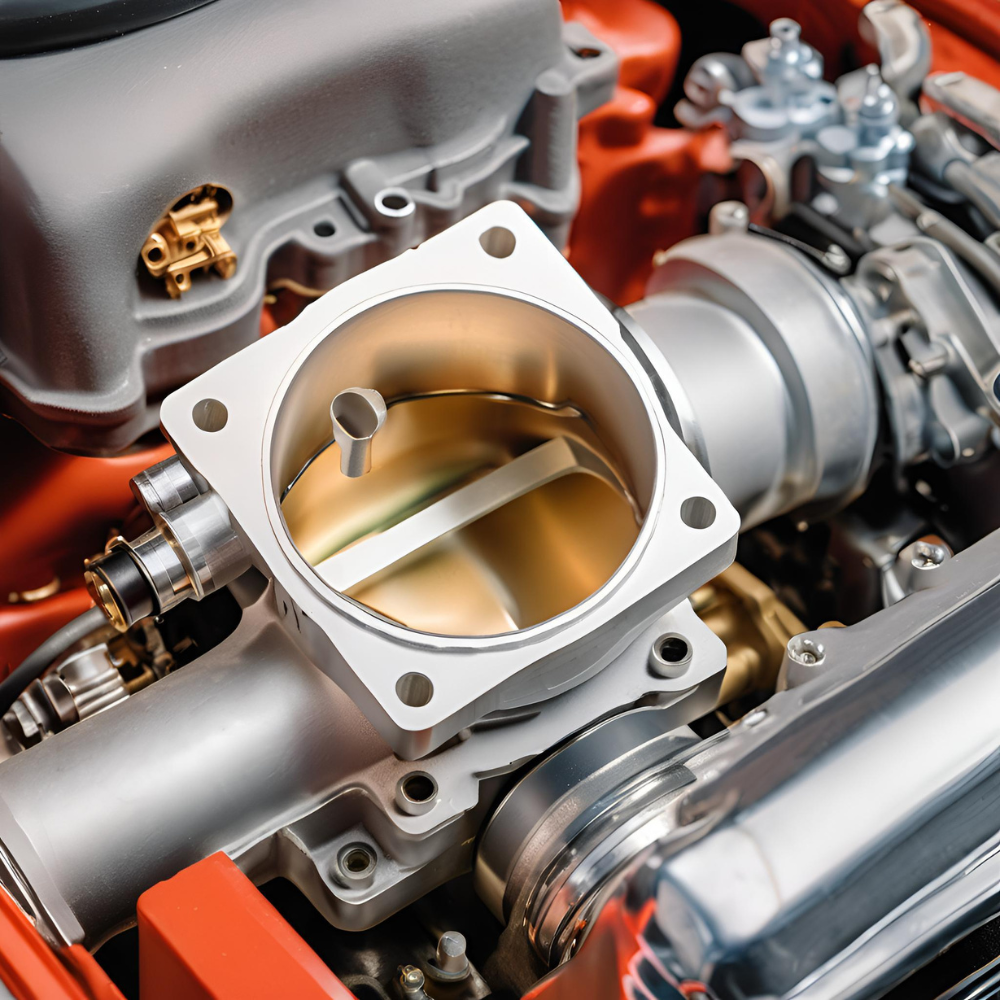
The single throttle system is a foundational component in the intake system of most internal combustion engines. It plays a crucial role in regulating the amount of air entering the engine, which directly impacts performance, efficiency, and emissions. Here’s an in-depth look at how the single throttle system works, its advantages, and its limitations.
What Is a Single Throttle System?
A single throttle system uses a single throttle body to control the airflow into the engine. The throttle body is located between the air intake manifold and the air filter. It has a throttle plate (or butterfly valve) that opens and closes in response to the driver’s input via the accelerator pedal.
Key Components of a Single Throttle System
- Throttle Body
- Houses the throttle plate that regulates airflow.
- Typically made of aluminum or plastic for lightweight and durability.
- Throttle Plate (Butterfly Valve)
- Rotates to open or close, controlling the volume of air entering the engine.
- Connected to a throttle shaft, which is actuated by the throttle cable or an electronic motor.
- Throttle Position Sensor (TPS)
- Measures the position of the throttle plate and sends signals to the engine control unit (ECU).
- Idle Air Control Valve (IAC)
- Manages air intake during idle to maintain a steady engine RPM.
- Electronic Throttle Control (ETC) (in modern vehicles)
- Replaces the mechanical cable with electronic actuators for precise throttle control.
- Intake Manifold
- Distributes the air from the throttle body to the engine’s cylinders.
How the Single Throttle System Works
- Idle Condition
- The throttle plate is nearly closed, and air passes through a small bypass or the idle air control valve to maintain a steady idle speed.
- Partial Throttle
- When the driver presses the accelerator lightly, the throttle plate opens partially, allowing more air into the engine. The ECU adjusts fuel delivery to match the airflow, maintaining an optimal air-fuel ratio.
- Wide-Open Throttle (WOT)
- At full throttle, the plate opens entirely, maximizing airflow and engine power output.
- Feedback Loop
- Sensors like the mass airflow sensor (MAF) and oxygen sensors (O2) provide real-time data to the ECU, ensuring precise air and fuel regulation.
Advantages of a Single Throttle System
- Simplicity
- The design is straightforward, making it easier to manufacture, maintain, and repair.
- Cost-Effective
- A single throttle body setup is less expensive compared to multiple throttle systems.
- Ease of Integration
- Works seamlessly with naturally aspirated engines and is adaptable to turbocharged systems.
- Compact Design
- Takes up less space in the engine bay, leaving room for other components.
Limitations of a Single Throttle System
- Airflow Distribution
- A single throttle body must feed all cylinders through the intake manifold. Uneven airflow distribution can occur, especially at higher RPMs.
- Performance Bottleneck
- The system can limit performance in high-power or high-revving engines because a single throttle body may not supply enough air.
- Throttle Response
- Compared to individual throttle bodies (ITBs), single throttle systems may have slower throttle response, especially in performance-focused applications.
- Engine Tuning Challenges
- Fine-tuning for optimal performance in modified engines can be more challenging compared to multiple throttle setups.
Applications of Single Throttle Systems
- Economy Cars: Found in most commuter vehicles for cost efficiency and reliability.
- Trucks and SUVs: Provides sufficient airflow for low-to-mid-range torque.
- Modified Cars: Often upgraded with larger throttle bodies or forced induction systems for increased airflow.
Performance Enhancements for Single Throttle Systems
- Larger Throttle Body
- Upgrading to a larger throttle body increases the volume of air entering the engine, boosting horsepower and torque.
- Porting and Polishing
- Smoothing the internal surfaces of the throttle body reduces airflow resistance, improving throttle response and efficiency.
- Cold Air Intake (CAI)
- Combining a single throttle body with a cold air intake reduces air temperature, increasing air density for better combustion.
- Forced Induction
- Turbochargers or superchargers can be added to push more air through the single throttle system, significantly increasing power.
Comparison: Single Throttle vs. Individual Throttle Bodies (ITBs)
| Feature | Single Throttle System | Individual Throttle Bodies (ITBs) |
|---|---|---|
| Airflow Control | Centralized through one throttle | Each cylinder has its own throttle body |
| Performance | Limited in high-power engines | Superior airflow and throttle response |
| Cost | More affordable | Expensive and complex |
| Throttle Response | Slower | Quick and precise |
| Ease of Maintenance | Easier | Requires more attention and tuning |
| Best Application | Daily drivers, economy, and trucks | High-performance sports and race cars |
Conclusion
The single throttle system remains a practical and reliable solution for most vehicles, balancing cost, simplicity, and performance. While it may not match the throttle response or airflow capacity of more advanced systems like ITBs, it is an excellent choice for daily driving and moderate performance enhancements. Upgrades such as larger throttle bodies or forced induction can unlock significant potential, making the single throttle system a versatile and widely used technology in the automotive world.