Brakes are among the most critical components of a vehicle, ensuring safety by slowing or stopping the motion of the vehicle. The design, type, and performance of brakes vary based on the vehicle’s intended use, from daily commuting to high-performance racing.
Types of Brakes
- Disc Brakes:
- Description: Utilize a rotor (disc) and brake pads to generate friction.
- Features:
- Excellent stopping power.
- Better heat dissipation, reducing fade during prolonged use.
- Common in modern vehicles, especially at the front.
- Applications: Passenger cars, motorcycles, sports cars, and high-performance vehicles.
- Drum Brakes:
- Description: Use brake shoes pressing against a drum to create friction.
- Features:
- Less expensive and simpler to produce.
- Lower performance and less heat dissipation than disc brakes.
- Applications: Older vehicles, economy cars, and some rear brake systems.
- Anti-lock Braking System (ABS):
- Description: Prevents wheel lock-up during sudden braking by modulating brake pressure.
- Features:
- Enhances vehicle control and reduces skidding.
- Mandatory in many modern vehicles.
- Applications: Standard in most new vehicles.
- Regenerative Brakes (in electric and hybrid vehicles):
- Description: Captures kinetic energy during braking and converts it into electricity to recharge the battery.
- Features:
- Increases efficiency and reduces wear on traditional brakes.
- Applications: EVs like Tesla, Nissan Leaf, and hybrids like Toyota Prius.
- Hydraulic Brakes:
- Description: Use brake fluid to transfer force from the pedal to the braking mechanism.
- Features:
- Smooth and consistent braking performance.
- Applications: Almost all modern vehicles.
- Mechanical Brakes:
- Description: Operated manually using cables or levers.
- Features:
- Typically found in parking brakes or emergency braking systems.
- Applications: Supplemental systems in vehicles.
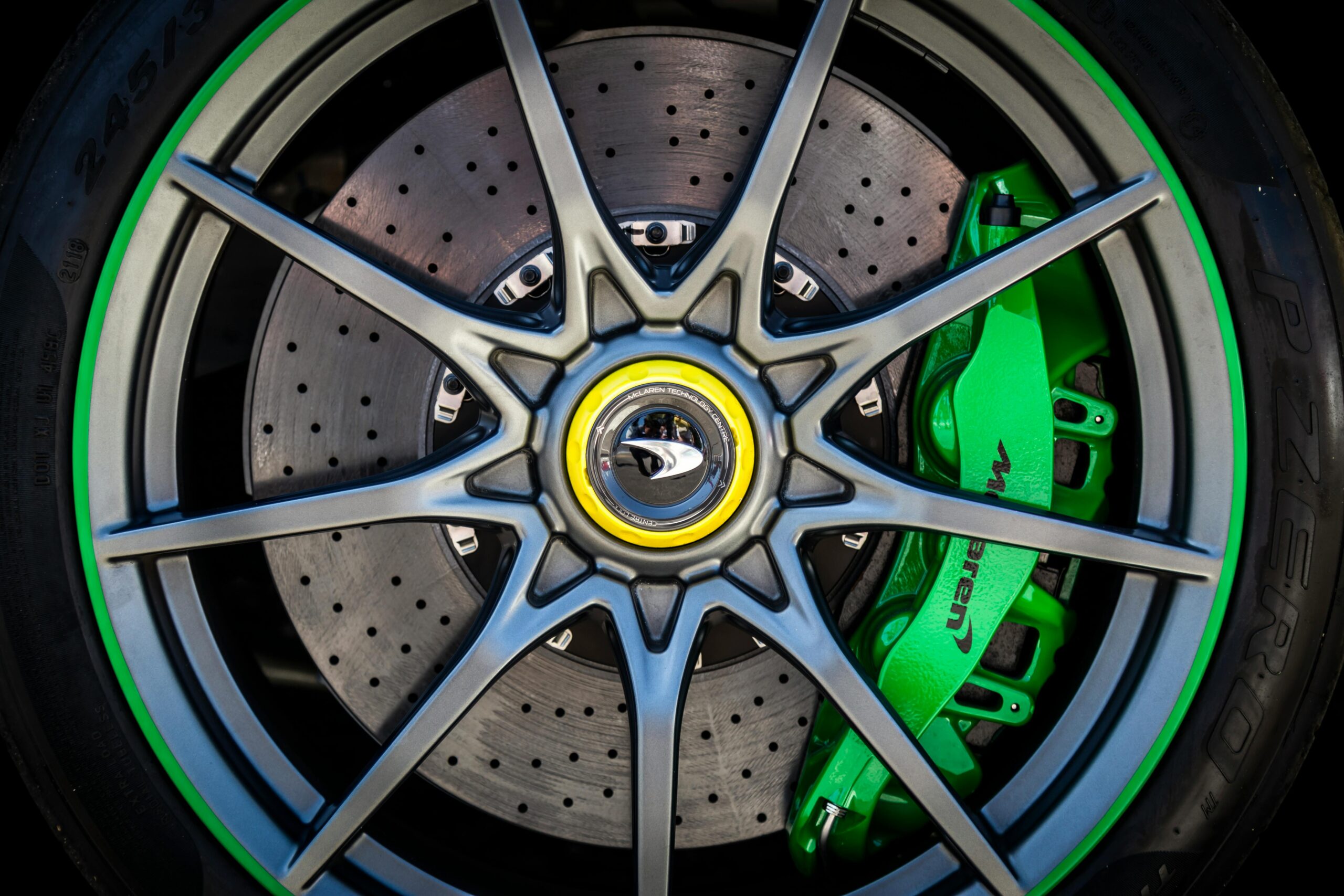
- Carbon-Ceramic Brakes:
- Description: Made of carbon-fiber reinforced ceramic composites.
- Features:
- Extreme durability and heat resistance.
- Lightweight and high-performance but very expensive.
- Applications: High-performance and luxury sports cars like Ferrari, Porsche, and McLaren.
Stock vs. Performance Brakes
Stock Brakes:
- Description:
- Braking systems installed by the manufacturer on mass-production vehicles.
- Designed to provide reliable performance for everyday driving.
- Advantages:
- Cost-effective and durable for regular use.
- Low maintenance requirements.
- Sufficient for normal driving conditions.
- Disadvantages:
- Limited performance under extreme conditions (e.g., racing, high-speed braking).
- Can fade during prolonged heavy braking due to heat buildup.
- Applications:
- Ideal for daily commuting and general-purpose vehicles.
Performance Brakes:
- Description:
- Upgraded braking systems designed for high-stress applications like racing or heavy-duty use.
- Advantages:
- Superior stopping power and heat dissipation.
- Reduced brake fade during intense use.
- Enhanced durability and longevity.
- Often lighter, reducing unsprung weight and improving vehicle handling.
- Disadvantages:
- Significantly more expensive than stock brakes.
- May require more frequent maintenance or specialized servicing.
- Can be noisy or less comfortable for daily use.
- Applications:
- Sports cars, racing vehicles, and performance-oriented vehicles.
- Suitable for track days, off-road adventures, or towing heavy loads.
Comparison: Stock vs. Performance Brakes
| Aspect | Stock Brakes | Performance Brakes |
|---|---|---|
| Cost | Affordable | Expensive |
| Stopping Power | Adequate for everyday driving | Superior, optimized for high performance |
| Heat Dissipation | Limited | Excellent, reduces brake fade |
| Durability | Good for normal use | Durable under extreme conditions |
| Comfort | Quiet and smooth | May be noisy or harsh for daily use |
| Maintenance | Low | Requires specialized servicing |
Performance Brakes: Types
- Slotted Rotors:
- Grooves cut into the rotor surface to improve cooling and prevent gas buildup.
- Better for wet conditions and high-performance use.
- Drilled Rotors:
- Holes drilled into the rotor for improved cooling and reduced weight.
- Effective for heat dissipation but can be prone to cracking under extreme stress.
- Carbon-Ceramic Rotors:
- Lightweight, highly durable, and resistant to fading.
- Found in supercars and high-end performance vehicles.
- High-Performance Brake Pads:
- Made of specialized materials like semi-metallic or ceramic compounds.
- Provide enhanced friction and longevity under demanding conditions.
- Big Brake Kits:
- Include larger rotors, calipers, and pads for maximum stopping power.
- Often used in track cars and vehicles with significant power upgrades.
When to Upgrade to Performance Brakes
- Racing or Track Days:
- For consistent and reliable braking under high-speed and high-temperature conditions.
- Towing and Heavy Loads:
- Performance brakes handle the additional stress of towing trailers or carrying heavy cargo.
- Enhanced Safety:
- High-performance cars or modified vehicles may need better brakes for safety.
- Off-Roading:
- Performance brakes withstand the rigors of rugged terrains and steep descents.
Conclusion
Brakes are essential for vehicle safety, and choosing the right type depends on your driving needs. Stock brakes are sufficient for most daily drivers, offering reliability and affordability. However, for enthusiasts, racers, or those requiring heavy-duty performance, upgrading to performance brakes provides the enhanced stopping power, durability, and heat resistance necessary for demanding conditions.
https://www.pexels.com/photo/close-up-view-of-a-luxury-car-wheel-and-brake-29964443/