In an internal combustion engine, valves are essential components that regulate the flow of gases in and out of the combustion chamber. Their primary function is to control the intake of the air-fuel mixture, as well as the exhaust of combustion gases, at precise moments during the engine’s cycle. Without valves, an engine would not be able to efficiently perform the intake and exhaust processes that are vital to generating power.
In this article, we will explore the important role of valves in an engine, how they work, and how they contribute to the overall performance and efficiency of an engine.
What Are Valves in an Engine?
Valves are mechanical components that open and close to control the flow of air and exhaust gases within an engine’s cylinders. They are typically controlled by the camshaft, which works in conjunction with the crankshaft and the timing system to ensure that the valves open and close at the right moments during the engine’s four-stroke cycle.
There are two main types of valves in a typical internal combustion engine:
- Intake Valves: These valves regulate the entry of the air-fuel mixture into the combustion chamber during the intake stroke.
- Exhaust Valves: These valves control the exit of exhaust gases from the combustion chamber during the exhaust stroke.
Together, the intake and exhaust valves work in tandem to ensure that the combustion chamber is properly filled with the air-fuel mixture and that the exhaust gases are expelled after combustion.
How Do Valves Work?
The opening and closing of engine valves are precisely timed to coordinate with the piston’s movement in the cylinder. This coordination happens during the four-stroke cycle, which consists of the intake stroke, compression stroke, power stroke, and exhaust stroke. Let’s break down how the valves operate in each of these strokes:
1. Intake Stroke:
- During the intake stroke, the intake valve opens as the piston moves down the cylinder.
- This allows the air-fuel mixture (a blend of air and fuel) to be drawn into the combustion chamber through the intake valve.
- The intake valve stays open for the majority of the intake stroke, allowing the piston to create a vacuum that sucks in the air-fuel mixture.
- The valve then closes once the piston reaches the bottom of its stroke, sealing the combustion chamber for the next compression phase.
2. Compression Stroke:
- The intake valve remains closed as the piston moves upward, compressing the air-fuel mixture inside the cylinder.
- The exhaust valve is also closed during this stroke to maintain the chamber’s seal.
- The pressure and temperature of the air-fuel mixture increase, making it ready for ignition.
3. Power Stroke:
- When the air-fuel mixture is ignited by the spark plug (in gasoline engines), the resulting explosion pushes the piston downward.
- Both the intake and exhaust valves remain closed during the power stroke to ensure that the combustion process is contained within the cylinder.
4. Exhaust Stroke:
- As the piston moves upward after combustion, the exhaust valve opens.
- This allows the spent exhaust gases to be pushed out of the cylinder as the piston moves up, completing the exhaust stroke.
- The exhaust valve stays open until the piston reaches the top of its stroke, at which point it closes, and the intake valve opens for the next cycle.
Valve Timing and Synchronization
The precise timing of when the valves open and close is critical to the engine’s efficiency and power output. This timing is controlled by the camshaft, which is driven by the crankshaft and operates in synchronization with the pistons.
The camshaft has lobes that push against the valve lifters (or cam followers), causing the valves to open at the correct moment. The camshaft’s speed and timing ensure that the intake and exhaust valves open and close in perfect harmony with the pistons’ movement.
In modern engines, variable valve timing (VVT) is often employed to adjust the timing of the valves dynamically based on engine speed, load, and other factors. This allows for improved performance, better fuel efficiency, and lower emissions across a range of driving conditions.
Valve Components
Several key components work together to ensure proper valve operation:
- Valve Stem: The long rod-like section of the valve that connects the head of the valve to the valve lifter or cam follower.
- Valve Head: The part of the valve that comes in contact with the valve seat to seal the combustion chamber.
- Valve Seat: A hardened surface where the valve head sits to form a tight seal when the valve is closed.
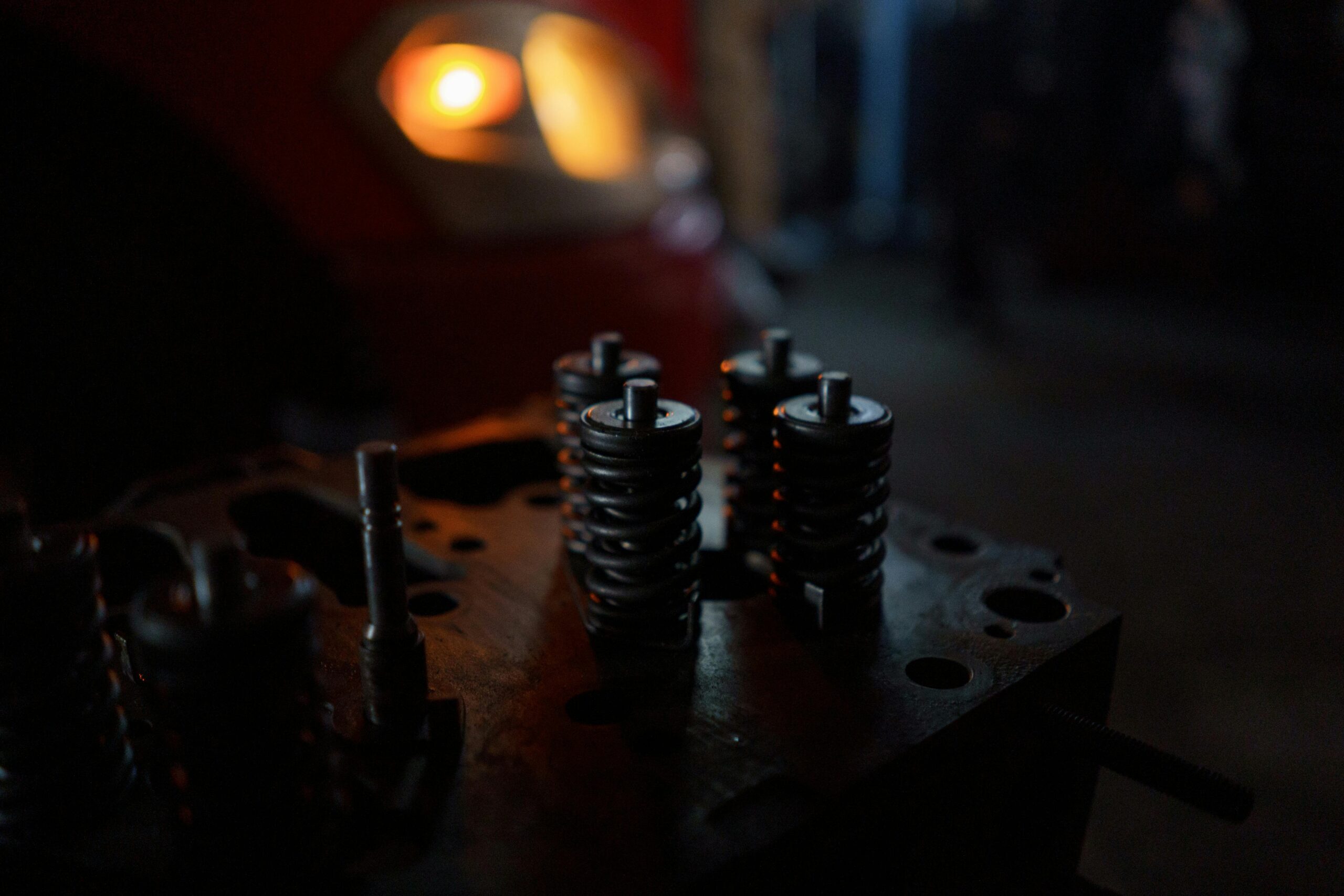
- Valve Springs: These springs provide the force to close the valves after they are opened by the camshaft. The springs push the valves back to their seated position to ensure the combustion chamber is sealed.
- Retainers and Keepers: These components hold the valve spring in place, ensuring that it remains properly aligned and compressed.
- Camshaft: As mentioned, the camshaft controls the opening and closing of the valves. It has lobes that push against the valve lifters or cam followers, operating the valves.
Types of Valve Configurations
Engines come in different valve configurations, which refer to the number and arrangement of intake and exhaust valves. The most common configurations are:
- Single Overhead Cam (SOHC): In this design, a single camshaft controls both intake and exhaust valves. This configuration is simpler and more cost-effective but offers less precise control over valve timing compared to other designs.
- Double Overhead Cam (DOHC): In this configuration, there are two camshafts: one for the intake valves and another for the exhaust valves. This setup allows for more precise control of valve timing, leading to better performance and efficiency.
- Pushrod Engines: In this traditional design, the camshaft is located at the base of the engine, and the valves are operated by pushrods and rocker arms. This configuration is often found in older or heavy-duty engines.
- Variable Valve Timing (VVT): This advanced technology adjusts the timing of the valves to optimize engine performance at different speeds and loads. VVT allows for better fuel efficiency, lower emissions, and enhanced power output.
The Importance of Valve Maintenance
Since the valves are critical to the engine’s intake and exhaust process, it is essential to maintain them to ensure the engine runs smoothly. Some key aspects of valve maintenance include:
- Valve Adjustments: Over time, the valves may wear or lose their proper seating alignment. Regular adjustments may be needed to maintain optimal valve clearance, ensuring proper sealing and performance.
- Valve Inspection: Regular inspections can identify any signs of wear, such as burned or cracked valves, which can affect engine efficiency and power. Replacing damaged valves is crucial to prevent more significant engine damage.
- Lubrication: The valves, valve springs, and other components need proper lubrication to reduce friction and wear. Regular oil changes help keep these parts well-lubricated, preventing premature failure.
- Timing Belt/Chain Maintenance: The camshaft that operates the valves is connected to the crankshaft via a timing belt or chain. Regular inspection and replacement of these components are vital to ensure the proper timing and synchronization of the valves.
Conclusion
Valves are essential for regulating the intake of air-fuel mixture and the exhaust of combustion gases in an engine. They play a critical role in the engine’s four-stroke cycle, enabling efficient combustion and energy production. The precise operation of the intake and exhaust valves, driven by the camshaft, ensures that the engine runs smoothly and efficiently, providing the power needed for vehicles and machines.
From basic valve components to advanced variable valve timing systems, the role of valves in modern engines cannot be overstated. Whether in performance, fuel efficiency, or emissions control, the valves serve as the gatekeepers that allow an engine to operate at its best. Proper valve maintenance and timing are essential to ensure the engine’s longevity and optimal performance over time.