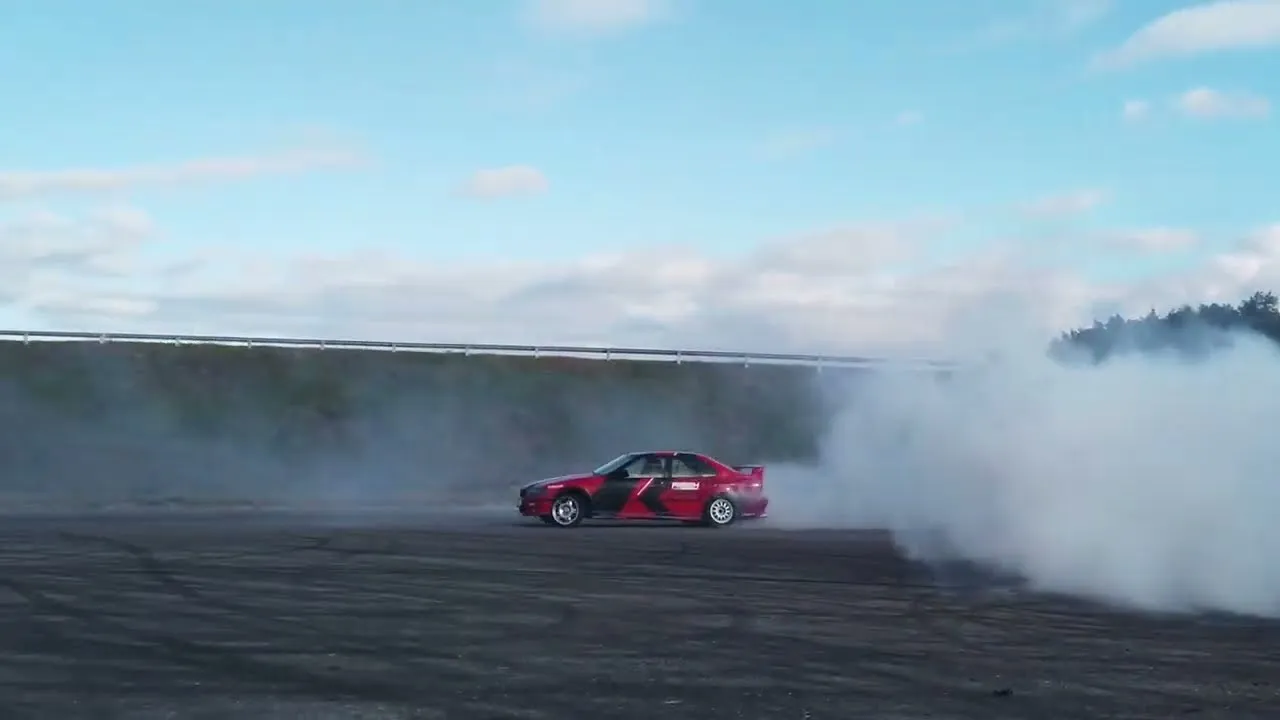
A Red Car #Drifting and Burning Tires
https://www.pexels.com/video/a-red-car-drifting-and-burning-tires-16001003/
History of Drifting
Drifting originated in Japan during the 1970s, primarily on the mountain roads of the Touge region. It was developed by street racers who needed effective ways to navigate tight corners at high speeds. Keiichi Tsuchiya, known as the “Drift King,” is often credited with popularizing the sport through his driving techniques and appearances in media, including the influential video series and the “Initial D” manga and anime.
Basic Concepts and Techniques
Oversteer and Understeer
Oversteer: This occurs when the rear wheels lose traction before the front wheels, causing the car to turn more than intended. Drifting relies on controlled oversteer to maintain a slide through a corner.
Understeer: The opposite of oversteer, where the front wheels lose traction, causing the car to turn less than intended. While not used in drifting, understanding understeer is essential for overall vehicle control.
Initiating a Drift
Starting a drift involves breaking the rear wheels’ traction while maintaining control of the vehicle. Several methods can achieve this, including:
Clutch Kick: Depressing the clutch and quickly releasing it to cause a sudden increase in engine power.
Power Over: Applying excessive throttle to overwhelm the rear tires’ grip.
Handbrake (E-Brake) Drift: Pulling the handbrake to lock the rear wheels temporarily.
Maintaining a Drift
Once initiated, maintaining a drift requires balancing throttle, steering, and vehicle weight distribution. Drivers use counter-steering (turning the wheel opposite to the direction of the drift) to control the angle and direction of the slide.
Exiting a Drift
To end a drift smoothly, drivers gradually reduce throttle input and steer the vehicle back in alignment with the intended path, allowing the rear wheels to regain traction.