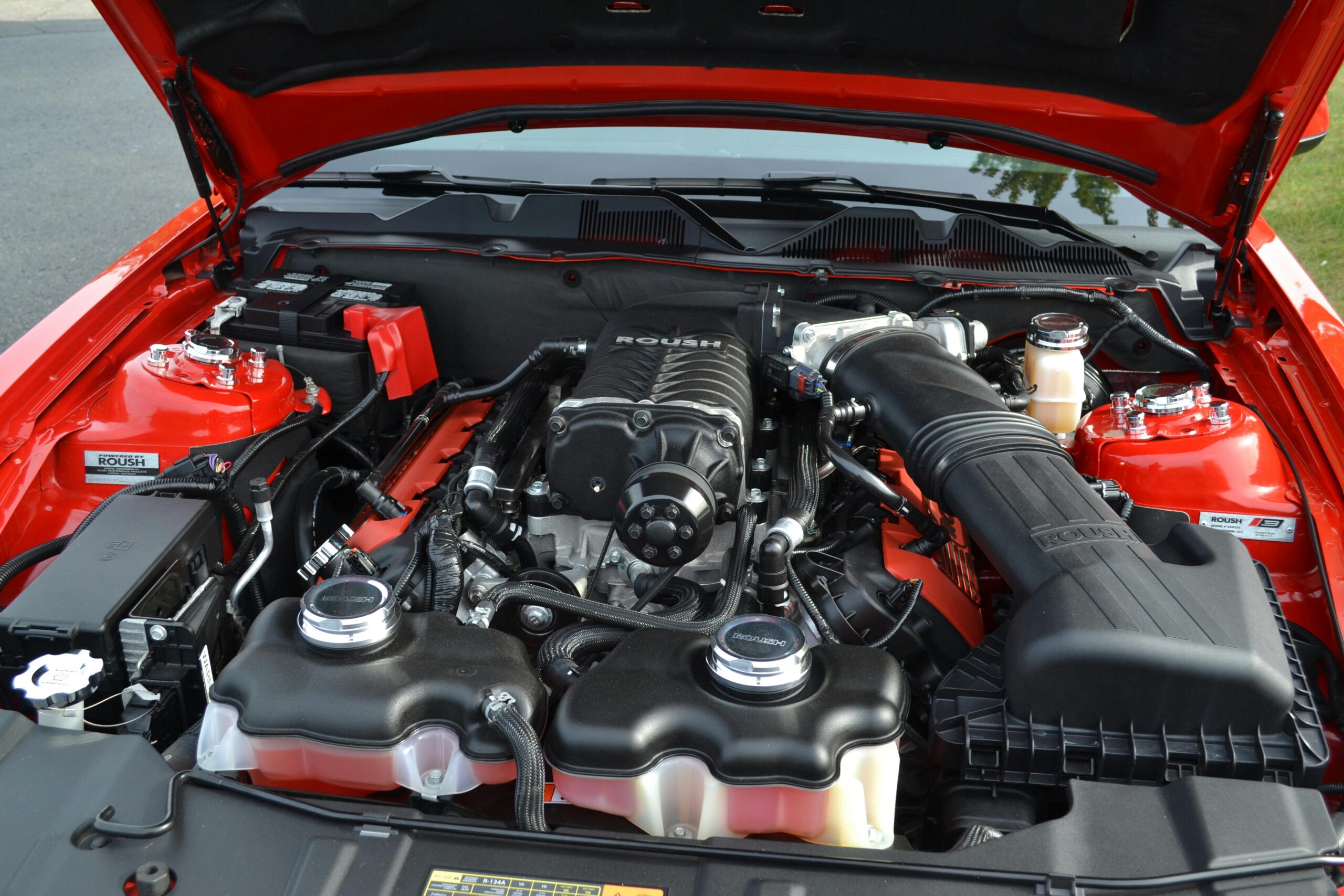
A supercharger is another form of forced induction, like the turbocharger, designed to increase an engine’s power output by forcing more air into the combustion chamber. This increase in air allows for more fuel to be burned, leading to higher power generation and enhanced engine performance. Unlike a turbocharger, which is powered by exhaust gases, a supercharger is mechanically driven by the engine itself, making it provide immediate power when needed.
In this article, we’ll explore what a supercharger is, how it works, its benefits, types, common issues, and maintenance tips.
What Is a Supercharger?
A supercharger is a mechanical device that increases the pressure or density of the air entering an internal combustion engine. By forcing more air into the engine, the supercharger allows more fuel to be injected, which in turn increases the engine’s power output. Superchargers are often used in performance cars, muscle cars, and racing vehicles to significantly boost horsepower and torque.
Superchargers come in various designs, but they all work on the principle of compressing air before it enters the engine’s intake manifold. This compressed air allows the engine to burn more fuel and produce more power than it would be capable of with naturally aspirated (non-supercharged) intake.
How Does a Supercharger Work?
The main function of a supercharger is to compress the air entering the engine, increasing its density. The more compressed the air, the more oxygen can fit into the engine’s combustion chamber. This results in more fuel being burned and ultimately more power being produced. Here’s how a supercharger works:
- Powering the Supercharger: A supercharger is powered directly by the engine through a belt or shaft that connects the supercharger to the crankshaft. As the engine runs, it drives the supercharger at a proportionate speed. This is different from a turbocharger, which is powered by exhaust gases.
- Compression of Air: The supercharger draws in air through the intake and compresses it, increasing the pressure of the air entering the engine. The compressed air is denser, meaning it contains more oxygen molecules per unit of volume.
- Air Entering the Engine: The compressed air is then pushed into the engine’s intake manifold and into the combustion chamber. With more air (and therefore more oxygen) available, the engine can burn more fuel during the combustion process.
- Burning More Fuel: With the extra oxygen from the compressed air, more fuel can be injected into the combustion chamber. This allows the engine to produce more power. The increase in fuel and air allows for a more powerful combustion cycle.
- More Power: As a result of the added air and fuel, the engine produces more power, which translates into higher horsepower and torque. Superchargers can provide instant power since they are driven directly by the engine, without the need for the delay that can occur with turbochargers (due to turbo lag).
Types of Superchargers
Superchargers come in different types, each with its own set of benefits and applications. The most common types are:
1. Roots Supercharger:
The Roots supercharger is one of the oldest and most common types of superchargers. It works by using two rotors that spin in opposite directions to compress the air. The Roots supercharger is known for its instant throttle response, providing immediate boost at lower RPMs. It’s often used in muscle cars and high-performance vehicles.
- Advantages: Instant boost, simple design, good at low RPMs.
- Disadvantages: Can be less efficient at higher RPMs, generates heat.
2. Centrifugal Supercharger:
The centrifugal supercharger works more like a turbocharger. It uses an impeller (similar to a turbine) to accelerate the air into the engine. It is typically driven by a belt, and the impeller spins at high speeds to generate compression. Centrifugal superchargers are more efficient at higher RPMs and provide more gradual increases in power.
- Advantages: More efficient at higher RPMs, can produce significant gains in top-end power.
- Disadvantages: Less effective at low RPMs, more lag compared to a Roots supercharger.
3. Twin-Screw Supercharger:
The twin-screw supercharger works by trapping air between two interlocking screws and compressing it as the screws rotate. This type of supercharger is highly efficient and delivers consistent power across a broad range of RPMs, making it a popular choice for performance applications.
- Advantages: Highly efficient, good for both low and high RPMs, produces less heat than a Roots supercharger.
- Disadvantages: More complex and expensive to manufacture, larger size.
4. Radial Supercharger:
The radial supercharger works by pulling in air radially through the rotors, compressing it in the process. This type of supercharger is not as commonly used in modern automotive applications but can still be found in some older performance vehicles and racing engines.
- Advantages: Simpler design and construction.
- Disadvantages: Less efficient than other types, more mechanical stress.
Benefits of a Supercharger
Superchargers offer a range of benefits for performance enthusiasts, car owners, and racers. Some of the key advantages include:
1. Instant Power (No Lag)
One of the key benefits of a supercharger is that it provides instant boost with no delay. Since a supercharger is directly driven by the engine via a belt, it doesn’t suffer from the turbo lag typically associated with turbochargers, which can take time to spool up before producing boost.
2. Increased Horsepower and Torque
Superchargers significantly increase the amount of air and fuel entering the engine, resulting in more horsepower and torque. This means faster acceleration, quicker throttle response, and overall better performance. The power gain is typically proportional to the amount of boost (pressure) provided by the supercharger.
3. Improved Engine Efficiency
By forcing more air into the engine, a supercharger makes the combustion process more efficient. This allows smaller engines to produce more power, improving both fuel efficiency and performance without the need for larger engine displacement.
4. Better High-Altitude Performance
At higher altitudes, naturally aspirated engines experience a decrease in power due to the lower air density. Since a supercharger compresses the air, it can help maintain performance levels even at high altitudes, where turbochargers might struggle to maintain efficiency.
5. Improved Towing and Load Performance
Superchargers are commonly used in trucks and vehicles designed for towing because they provide a substantial increase in torque at lower RPMs. This makes it easier to handle heavy loads and improve towing capacity.
Common Supercharger Issues
While superchargers are reliable and durable, they can experience issues if not properly maintained or installed. Some common problems include:
- Heat Generation: Superchargers generate a significant amount of heat, especially when producing high levels of boost. Excess heat can reduce the efficiency of the engine and potentially damage components. Using an intercooler (a device that cools the compressed air) is one solution to reduce heat buildup.
- Belt Slippage: Superchargers are driven by a belt connected to the engine’s crankshaft. Over time, the belt may wear out or slip, reducing the efficiency of the supercharger. Regular inspection of the belt and replacement when necessary is crucial for maintaining optimal performance.
- Increased Wear on Engine Components: Superchargers put additional strain on the engine components, especially the crankshaft and bearings. If the engine isn’t built to handle the additional power, it can lead to premature wear or failure of engine parts.
- Oil Contamination: Superchargers use oil for lubrication, and over time, the oil can become contaminated with debris, reducing its effectiveness. Regular oil changes and maintenance are necessary to ensure the supercharger remains in good condition.
How to Maintain a Supercharger
To ensure the longevity and performance of your supercharger, regular maintenance is essential. Some maintenance tips include:
- Check and Change Oil Regularly: Superchargers require oil for lubrication. It’s important to change the oil in the supercharger at regular intervals to ensure smooth operation. Always use the manufacturer-recommended oil type and avoid oil contamination.
- Monitor Belt Tension: Keep an eye on the supercharger belt for signs of wear and tear. A loose or worn-out belt can reduce the efficiency of the supercharger. Regularly check the belt’s tension and replace it when needed.
- Install an Intercooler: To combat heat buildup, install an intercooler between the supercharger and the engine’s intake. This will help keep the air temperature lower, ensuring more efficient compression and combustion.
- Inspect for Leaks: Check the supercharger system for any signs of air or oil leaks. Leaks can lead to a loss of power and can cause engine damage over time.
- Use High-Quality Fuel: Supercharged engines are more demanding on fuel. Always use high-octane fuel that is compatible with your engine’s specifications to prevent knocking and ensure smooth performance.
Conclusion
A supercharger is a powerful tool for enhancing engine performance, delivering instant boost, and significantly increasing horsepower and torque. Whether you’re looking to enhance your vehicle’s acceleration, improve towing capability, or simply increase engine power, a supercharger can provide impressive results. With the right type of supercharger, proper maintenance, and installation, your vehicle can enjoy the benefits of boosted performance and efficiency.
However, it’s essential to understand the additional strain a supercharger places on your engine and the maintenance required to keep everything in optimal condition. Whether you’re building a performance vehicle or looking to add some power to your daily driver, a supercharger can help you unlock more performance potential.